
Digital advertising has become one of the most powerful growth drivers for Australian businesses across industries. Whether you’re a local service provider, an eCommerce brand, or a B2B company, choosing the right paid advertising platform can significantly impact your return on investment. At Evosion, we’ve seen firsthand how selecting the right channel can determine whether campaigns scale profitably or struggle to convert.
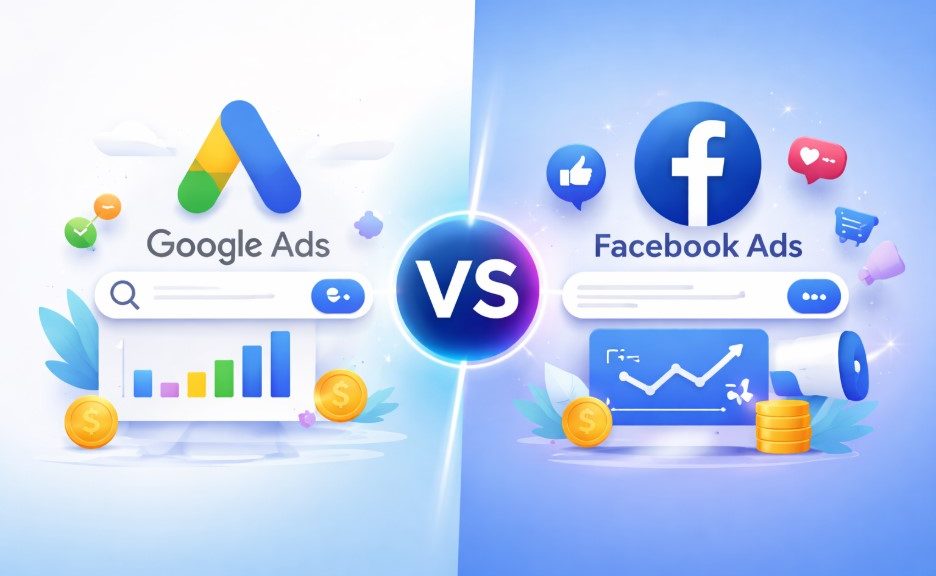
Two platforms dominate the PPC & Paid Media landscape: Google Ads and Facebook Ads. Both offer immense reach, advanced targeting, and flexible budgets but they operate in very different ways. This blog explores Google Ads vs Facebook Ads in depth to help Australian businesses decide which platform delivers better ROI based on goals, budgets, and audience intent.
What Is the Core Difference Between Google Ads and Facebook Ads?
Before comparing performance, it’s important to understand the fundamental difference between these two advertising platforms. Google Ads focuses on intent-driven advertising. Users actively search for products or services, making Google Ads ideal for capturing demand now it exists. Facebook Ads, on the other hand, operate on interest-based discovery, introducing brands to users while they browse content.
Key differences include:
- Search intent vs audience interest
- Pull marketing vs push marketing
- Immediate demand vs demand creation
How Does Google Ads Work for Australian Businesses?
Google Ads allows businesses to appear across Google Search, Display Network, YouTube, and partner sites. Ads are triggered by keywords users actively search for, making it highly effective for high-intent leads. For Australian businesses, Google Ads is particularly strong in competitive local markets such as trades, healthcare, legal services, and professional consulting.
Key Google Ads formats include:
- Search ads for intent-based queries
- Display ads for brand awareness
- YouTube ads for video engagement
- Shopping ads for eCommerce
How Does Facebook Ads Work for Australian Businesses?
Facebook Ads operate across Facebook, Instagram, Messenger, and the Audience Network. Instead of relying on keywords, advertisers target users based on demographics, interests, behaviours, and custom audiences. This makes Facebook Ads powerful for storytelling, visual branding, and demand generation especially for lifestyle brands, online stores, and service providers with longer sales cycles.
Core Facebook Ads strengths include:
- Advanced audience targeting
- Strong visual and video formats
- Cost-effective reach
- Retargeting and lookalike audiences
Which Platform Delivers Better ROI for Lead Generation?
ROI depends heavily on business objectives, but lead generation often favours platforms with strong intent signals. Google Ads generally produces higher-quality leads because users are actively searching for solutions. Australian businesses in service-based industries often see faster returns through Google Search campaigns. Facebook Ads can still generate leads at lower costs, but these leads may require more nurturing before conversion.
ROI comparison for lead generation:
- Google Ads: Higher intent, higher cost per click
- Facebook Ads: Lower cost per lead, lower intent initially
Which Platform Is More Cost-Effective for Small Businesses?
Budget efficiency is a major concern for small and medium Australian businesses. Facebook Ads typically offer a lower cost per click and more flexible budgets, making them attractive for businesses with limited ad spend. Google Ads, while more expensive, can justify the cost with higher conversion rates.
Cost considerations:
- Google Ads: Higher CPC, stronger conversion intent
- Facebook Ads: Lower CPC, scalable reach
How Do Targeting Capabilities Compare Between the Two Platforms?
Targeting is where Facebook Ads truly shine. Targeting capabilities differ mainly in how precisely each platform reaches its audience. One focuses on detailed user demographics and interests, while the other relies more on intent, context, and search behaviour to connect with users.
Facebook allows advertisers to target users based on:
- Interests and hobbies
- Purchase behaviour
- Life events
- Custom and lookalike audiences
Google Ads primarily targets based on keywords and search behaviour, though audience targeting has improved with in-market and affinity audiences. For detailed audience segmentation, Facebook Ads offer more control.
Which Platform Works Better for eCommerce Businesses?
eCommerce businesses in Australia often benefit from using both platforms but for different stages of the funnel. Google Shopping and Search Ads capture users ready to purchase, while Facebook Ads excel at product discovery and retargeting abandoned carts.
Platform strengths for eCommerce:
- Google Ads: High purchase intent
- Facebook Ads: Visual discovery and remarketing
How Does Performance Differ for Brand Awareness Campaigns?
Brand awareness campaigns prioritise reach, engagement, and visibility rather than immediate conversions.
Facebook Ads are more effective for awareness due to:
- Lower CPMs
- Engaging video formats
- Social sharing potential
Google Display and YouTube Ads also support awareness, but Facebook often delivers stronger engagement at lower costs.
How Do Conversion Tracking and Analytics Compare?
Both platforms offer robust tracking, but their approaches differ. Google Ads integrates seamlessly with Google Analytics, offering detailed insights into user behaviour post-click. Facebook Ads rely heavily on the Meta Pixel, which can be affected by privacy changes and browser restrictions. For data accuracy and attribution clarity, Google Ads often provides more reliable insights.
Which Platform Aligns Better With PPC & Paid Media Strategies?
A strong PPC & Paid Media strategy doesn’t rely on one platform alone. Google Ads work best for capturing demand, while Facebook Ads support demand creation and remarketing. Together, they form a full-funnel strategy that maximises ROI.
Businesses that integrate both platforms often achieve:
- Lower overall acquisition costs
- Higher lifetime customer value
- Stronger brand recall
Should Australian Businesses Choose Google Ads or Facebook Ads?
There is no universal winner in the Google Ads vs Facebook Ads debate. The right choice depends on your industry, audience, budget, and growth stage.
Choose Google Ads if:
- You need immediate leads or sales
- You operate in a high-intent industry
- You target local or service-based searches
Choose Facebook Ads if:
- You want to build brand awareness
- Your product requires education or storytelling
- You want scalable audience targeting
Conclusion
For Australian businesses, the best ROI doesn’t come from choosing one platform over the other; it comes from understanding how each platform fits into your growth strategy. Evosion recommends aligning Google Ads with high-intent conversion goals while leveraging Facebook Ads for awareness, nurturing, and retargeting. When combined effectively, these platforms create a powerful paid media ecosystem that drives sustainable growth. If you’re unsure which platform suits your business goals or how to optimise performance, contact us today to build a data-driven strategy tailored to your business.